Tokyo doesn’t sleep, but it does change costumes. The city you experience at noon — efficient, polite, architecturally ambitious — bears little resemblance to the city that emerges after 10 PM. The suits come off. The neon comes on. And in the narrow alleys of Shinjuku, a parallel food universe opens its doors to anyone willing to duck under a noren curtain and follow the smoke.
I spent six nights eating my way through Shinjuku’s hidden food scene, starting each crawl around 9 PM and rarely returning to my hotel before 2 AM. What follows is not a restaurant guide — most of these places don’t have websites, English menus, or in some cases, names. It’s a map of flavors, drawn from memory and grease-stained notebooks, through alleys that Google Maps doesn’t know exist.
Omoide Yokocho: Memory Lane
Start at Omoide Yokocho, the narrow alley complex just north of Shinjuku Station’s west exit. Known colloquially as “Piss Alley” (a name that dates back to the post-war era and is considerably less relevant today), this is Tokyo’s most concentrated collection of tiny yakitori joints, each barely wider than a closet and seating four to eight people at a counter.
The air here is thick with smoke from charcoal grills. Yakitori masters — and they are truly masters, some having grilled nothing but chicken skewers for thirty or forty years — work over binchōtan charcoal, turning skewers with mechanical precision. The best stalls serve every part of the chicken: breast, thigh, skin, heart, liver, gizzard, cartilage, and tail. If you’ve never had chicken tail (bonchiri), you’re missing one of the great pleasures of Japanese cuisine — a tiny nugget of fat and meat that crisps on the grill and melts on the tongue.
Order tsukune (chicken meatball) with egg yolk dip for your first skewer. Watch the master shape the mince by hand, grill it over white-hot coals, glaze it with tare sauce that’s been building in the same pot for years — a living condiment that grows more complex with each day’s additions. Then dip the hot skewer into raw egg yolk and eat it in one bite. If you’re not making involuntary sounds of pleasure, check your pulse.
The etiquette is straightforward: order at least two or three items (one drink, one food is the minimum to hold your seat), eat relatively quickly, and don’t linger if people are waiting outside. These places turn their tiny seats over multiple times per evening, and the social contract requires cooperation. Don’t take photos of other customers. Do compliment the cook. And always, always finish everything you order — waste is the gravest insult in Japanese food culture.
In Tokyo, the smaller the restaurant, the better the food. A counter with six seats and one chef who’s been making the same dish for decades will outperform any large restaurant, every time. -Sofia Martins
Golden Gai: The Bar That Time Forgot
Two minutes’ walk from Omoide Yokocho lies Golden Gai, a labyrinth of six narrow alleys containing roughly 200 bars, each holding five to twelve people. These are not cocktail bars or nightclubs. They’re tiny, eccentric, personal spaces, each reflecting the personality and obsessions of its owner. One is devoted entirely to horror movies. Another plays only vinyl jazz records from the 1950s. A third is wallpapered floor to ceiling with manga pages.
Golden Gai is not technically a food destination, but many bars serve small dishes — otoshi (appetizer snacks) come with your cover charge, and some owners cook proper food between pouring drinks. I found a bar run by a former sushi chef who now makes onigiri (rice balls) to order while mixing whiskey highballs. His salmon and shiso onigiri, pressed firmly and grilled lightly on a small gas burner behind the bar, was absurdly delicious — the kind of simple food that reminds you that technique matters more than ingredients.
The Ramen Underground
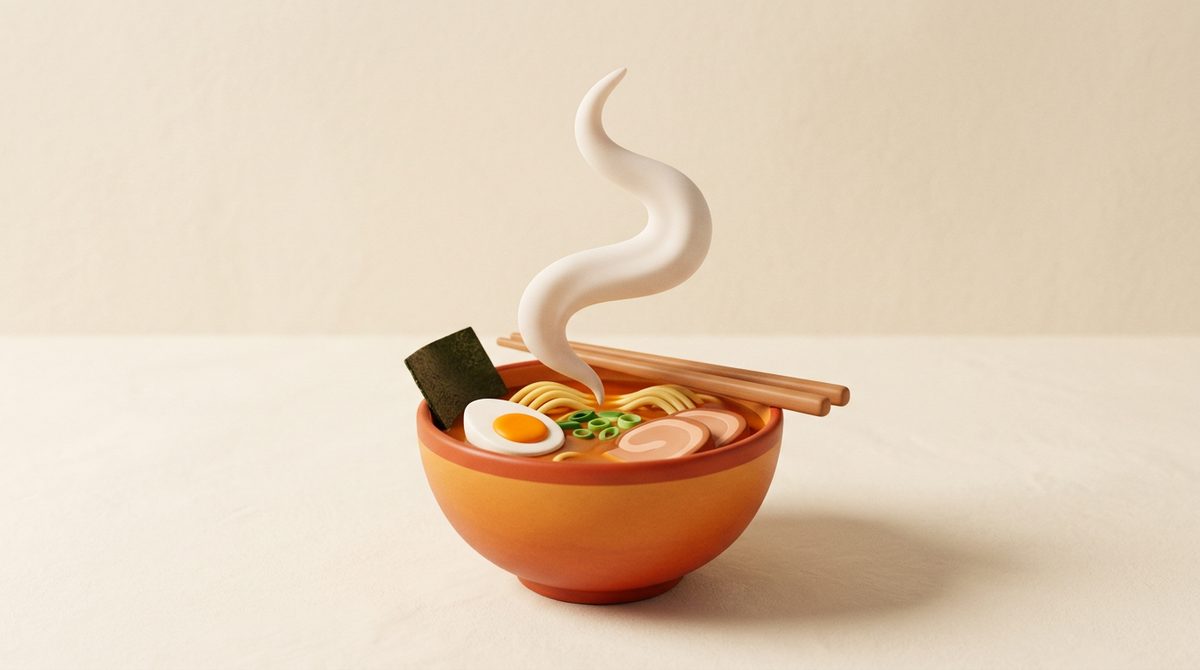
After midnight, Shinjuku’s ramen scene reaches its peak. The best bowls are often found in basements or on upper floors, accessible by stairs that look like they lead to someone’s apartment rather than a restaurant. Fuunji, famous for its tsukemen (dipping ramen), has a line that extends down the stairs and onto the street at 1 AM on a Tuesday. The wait is forty minutes. The meal takes twelve minutes. The memory lasts years.
- Tonkotsu ramen at Fuunji — thick, creamy pork bone broth simmered for eighteen hours until it’s opaque and viscous, served with firm noodles meant for dipping. The broth clings to each noodle like a coating of liquid silk. Order the large portion (tokumori) and the ajitama (seasoned soft-boiled egg).
- Shoyu ramen at a nameless basement spot — clear soy-based broth with a depth of flavor that seems impossible from its appearance. The noodles are thin and straight, the chashu is torched to order, and the owner serves exactly fifty bowls per night before closing.
- Tantanmen (sesame-chili ramen) from a standing counter near the east exit — fiery, nutty, and complex, with hand-ground sesame paste and chili oil that has genuine heat without overwhelming the other flavors.
- Tsukemen (dipping noodles) — cold noodles served separately from a concentrated, almost sauce-like broth. You dip the noodles into the broth, eating them with a satisfying slurp. When the noodles are gone, ask for soup-wari (broth dilution) to drink the remaining sauce as a soup.

Kabukicho’s Hidden Izakayas
Kabukicho, Shinjuku’s entertainment district, has a reputation that precedes it. Neon-drenched, chaotic, occasionally seedy, it’s the Tokyo that appears in every cyberpunk film and anime. But behind the flashy exteriors, serious food hides in basement izakayas that cater to locals who know where to look.
My best discovery was a place three floors underground, accessed through a door that looked like a maintenance entrance. The owner, a woman in her sixties who introduced herself simply as Mama, ran the kitchen and the room with quiet authority. The menu was handwritten in Japanese on strips of paper pasted to the wall. No English. No pictures. I pointed at random and trusted fate.
Fate delivered: grilled mackerel with grated daikon, agedashi tofu in a dashi broth that tasted like distilled umami, a plate of edamame tossed with garlic and chili, and a bowl of nikujaga — a home-style beef and potato stew that Mama said was her mother’s recipe. Each dish was simple, perfect, and served with the quiet confidence of someone who has been cooking the same things brilliantly for decades.
The bill for everything — food and three glasses of sake — was ¥3,200, roughly €20. In Shinjuku. Three floors underground. In a restaurant with no sign, no website, and no interest in being discovered by anyone who doesn’t already know it exists.
The 4 AM Convenience Store
Every Tokyo food crawl ends the same way: at a convenience store. This might sound anticlimactic, but Japanese konbini (convenience stores) are a culinary category unto themselves. A 7-Eleven in Tokyo bears no resemblance to its Western counterpart. The onigiri are made fresh multiple times daily with premium rice. The egg sandwiches — white bread, no crust, thick layer of creamy egg salad — are a genuine delicacy that food writers have dedicated entire articles to explaining.
At 4 AM, standing outside a FamilyMart in Kabukicho with a melon pan (sweet bread with cookie crust) and a can of hot coffee from the vending machine, watching Shinjuku’s night owls heading home and its early risers heading out, I realized that Tokyo’s food culture isn’t about any single meal or restaurant. It’s about the accumulation — the way flavors layer over the course of an evening, from smoky yakitori to rich ramen to simple rice ball, each one building on the last, creating a complete experience that no single restaurant could provide.
This is why you eat in Tokyo after dark. Not for any one dish. For the journey between them.