I didn’t go to Bali for wellness. I went because my laptop was open eighteen hours a day, my Slack notifications sounded like a slot machine, and I’d started having conversations with myself in airports that I couldn’t remember afterward. The digital nomad dream — work from anywhere, live on your terms, be free — had quietly transformed into a productivity nightmare wrapped in a coconut-scented Instagram filter.
By the time my flight landed in Denpasar, I hadn’t taken a full day off in seven months. Not a single day without email, without a client call, without “just quickly checking something.” My wrist ached from typing. My eyes burned from screens. I slept in ninety-minute intervals like a submarine sailor. I had 43,000 followers on social media and zero real friends in whatever city I happened to be inhabiting that month.
I was, by every metric the digital nomad community celebrates, killing it. I was also, by every metric that actually matters, falling apart.
The Ubud Detox
Ubud, Bali’s cultural heart, has become a cliché of Western wellness tourism. Yoga retreats, juice bars, “healing circles,” and enough dreamcatcher merchandise to furnish a small country. I arrived cynical, armed with preconceptions about trust-fund travelers finding themselves over overpriced smoothie bowls. Within a week, Ubud had dismantled every one of those preconceptions with the quiet efficiency of a place that has been absorbing skeptics for decades.
My accommodation was a small bamboo house on the edge of the Campuhan Ridge, overlooking a river valley thick with tropical vegetation. The WiFi password was written on a piece of paper that the owner handed me with a smile and a suggestion: “Maybe try not using it for a few days first?”
I laughed. Then I tried it. The first day without internet was physically uncomfortable — phantom phone buzzes, constant impulses to check email, a gnawing anxiety that the world was continuing without my participation and somehow this constituted an emergency. The second day was worse. By the third day, something shifted. The anxiety didn’t disappear, but it changed shape. It became recognizable — not as a response to any real situation, but as a habit, a neurological groove worn so deep by years of constant connectivity that my brain had forgotten how to be idle.
We talk about digital detox like it’s a luxury. It’s not. It’s maintenance. You wouldn’t run an engine for seven months without changing the oil. Your mind deserves at least the same consideration. -Sofia Martins
Learning to Do Nothing
The hardest part of my Bali month wasn’t meditation or yoga or any structured activity. It was the unstructured time. Hours with nothing planned, nothing to produce, nothing to optimize. For someone whose identity had become inseparable from productivity, doing nothing felt like a threat to my existence.
I signed up for a ten-day Vipassana-inspired meditation program at a center outside Ubud. Not the full silent retreat (I wasn’t ready for that level of commitment), but a structured daily practice: two hours of sitting meditation in the morning, one hour in the evening, and a midday session of walking meditation through the rice fields.
The first three days were a disaster. My mind raced. My back hurt. I fidgeted. I composed emails in my head, designed client presentations, and mentally reorganized my Notion workspace. The instructor, a Balinese man named Ketut who had been meditating for thirty years, told me this was normal. “Your mind is like a monkey in a cage,” he said. “It’s been running on a wheel for so long, it doesn’t know how to stop. Don’t fight it. Just watch.”
Watching your own thoughts without engaging them is surprisingly difficult and unexpectedly revealing. I discovered that approximately 80% of my mental activity was anxiety about the future or regret about the past. The present moment — the actual, lived reality of sitting on a cushion in a bamboo pavilion with birds singing and incense burning — barely registered. I was physically in Bali but mentally in seventeen different time zones simultaneously.
The Rice Field Walks
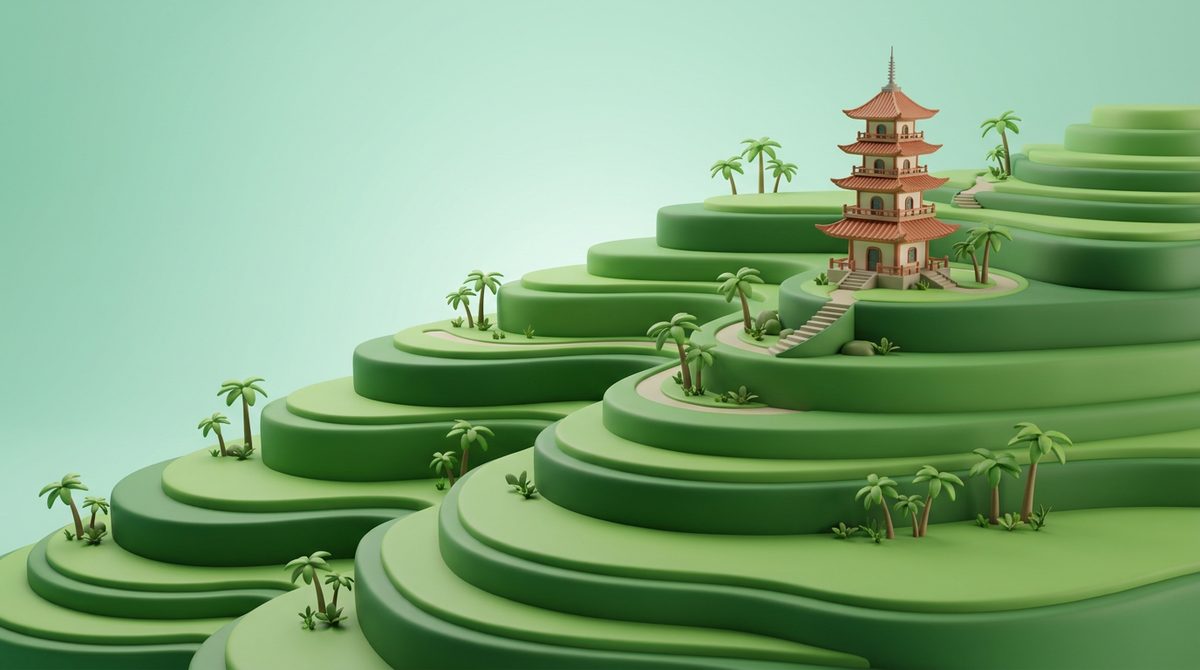
Walking meditation became my anchor. Every day at noon, I’d walk the narrow paths between the rice terraces of Tegallalang, stepping slowly and deliberately, focusing on the physical sensations — feet on warm earth, sun on skin, the sound of water flowing through the irrigation channels that the Balinese have maintained for over a thousand years.
The subak system — Bali’s traditional cooperative water management — is a UNESCO World Heritage site and a masterclass in sustainable community organization. Water flows from the volcanic lakes at the island’s center through a complex network of channels, tunnels, and weirs, distributed to rice farmers through a democratic system that has operated since the ninth century. Every farmer takes what they need. No one takes more. The system works because everyone’s prosperity depends on everyone else’s restraint.

There’s a metaphor in there somewhere about bandwidth, shared resources, and the digital economy, but I was trying not to think in metaphors. I was trying to just walk.
The Body Remembers
Two weeks in, my body began to change. Not dramatically — I didn’t undergo some cinematic transformation. But the constant tension in my shoulders softened. My jaw, which I’d been clenching so hard that my dentist had prescribed a night guard, relaxed. I started sleeping in continuous blocks of six, then seven, then eight hours. I stopped waking at 3 AM with my heart racing about deadlines that were weeks away.
I also started to notice things. The sound of geckos at dusk. The way rice paddies change color through the day — emerald at dawn, yellow-green at noon, golden at sunset. The smell of temple offerings: frangipani flowers, incense, and rice on banana-leaf trays that appear on every doorstep, every street corner, every dashboard of every car on the island.
Bali is a place that rewards attention. But attention is exactly what the digital nomad lifestyle depletes. We spend our days managing attention — directing it, monetizing it, selling it, fighting for it — until we have none left for the actual world around us. The irony of traveling to beautiful places while staring at a laptop screen had never struck me before. In Ubud, it became impossible to ignore.
Coming Back Online
I didn’t abandon the internet permanently. That would be a different story — one about privilege and impracticality. After my month in Bali, I came back online with new rules. No screens before 9 AM. No email after 6 PM. One full day offline per week. Phone charges in a different room than where I sleep. Social media limited to thirty minutes daily, and only for posting, never scrolling.
These rules sound rigid. They are. But rigidity, I discovered, is what freedom actually requires. Without boundaries, the digital world expands to fill every available moment of consciousness. It’s not malicious — it’s just the nature of systems designed to capture and hold attention. Setting limits isn’t deprivation. It’s self-defense.
The month in Bali didn’t fix me. I’m not “healed” or “transformed” or whatever the wellness industry promises. I still work too much. I still check email more than I should. I still catch myself doom-scrolling at midnight when I know I should be sleeping. But I have a reference point now — a memory of what my mind felt like when it wasn’t constantly consuming and producing digital content. That memory is an anchor, and every time I drift too far from it, I can feel the rope pulling me back.
Ketut told me something on my last day that I think about often: “The mind is like water. Left alone, it becomes clear. Stirred constantly, it becomes mud. Most people live in mud and don’t know what clear water looks like.” Bali showed me clear water. The work of keeping it clear is mine to do, every day, wherever I am.